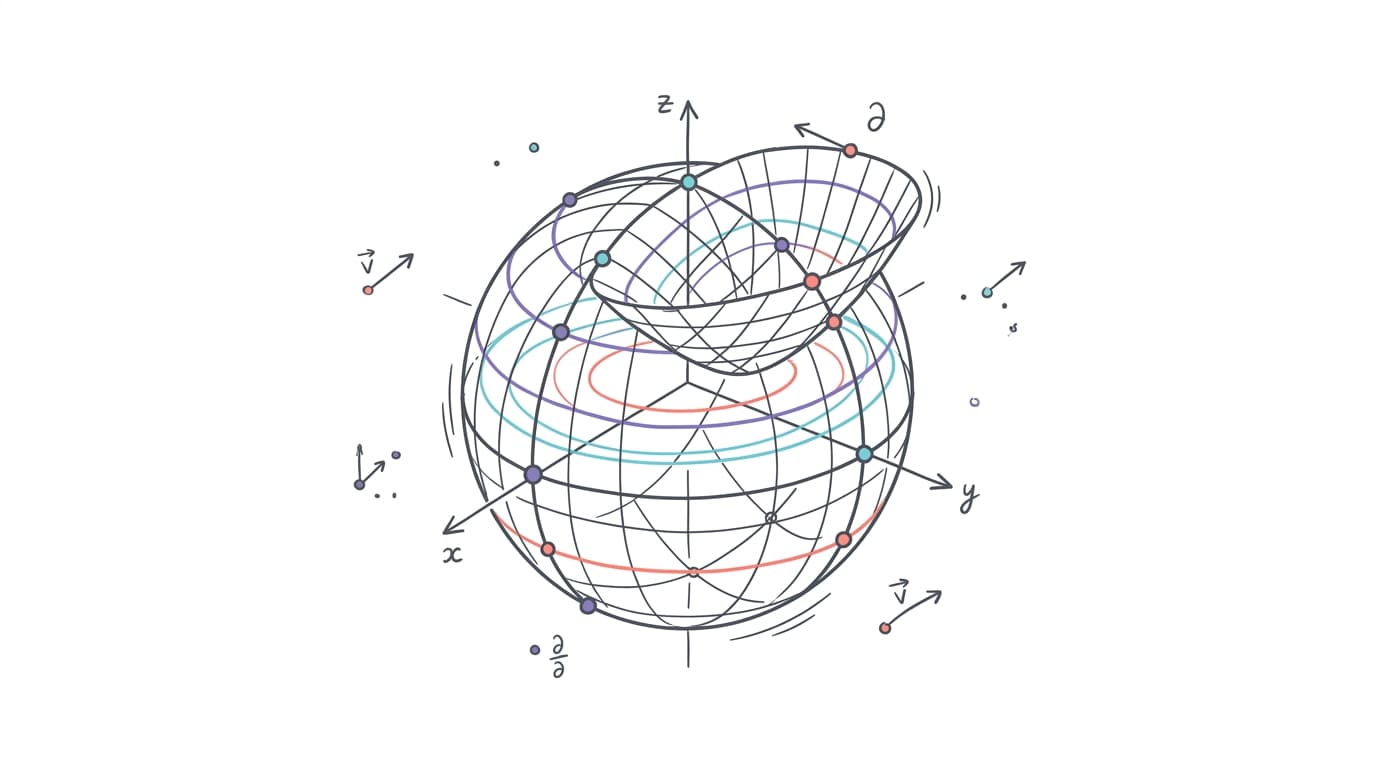
In multivariable calculus and computer graphics, 3D quadric surfaces are continuous 2D manifolds embedded within 3D Euclidean space R3. They are defined implicitly by the general second-degree equation in three variables (x,y,z):
Ax2+By2+Cz2+Dxy+Eyz+Fxz+Gx+Hy+Iz+J=0
Depending on the signs and values of coefficients A,B,C, quadric surfaces take the form of spheres, ellipsoids, paraboloids, hyperboloids, or tori rings.
Below is an interactive Three.js WebGL 3D Graph Engine. Use the dropdown preset selector to switch between quadric equations (x2+y2+z2=R2, Paraboloid, Hyperboloid, Torus), toggle wireframe mesh mode, or drag with your mouse/touch to orbit in 3D space:
Interactive 3D Quadric Surface & Implicit Graph Engine
z = implicit surface: f(xz = yz = z) = 0
3D Surfaces:
Drag to rotate • Scroll to zoom
Hover surface to inspect (x, y, z)
2. Classification of Quadric Surfaces in R3
The 3D Sphere (x2+y2+z2=R2)
The most symmetric 3D quadric surface. Every point on the boundary maintains distance R from center (0,0,0):
x2+y2+z2=R2
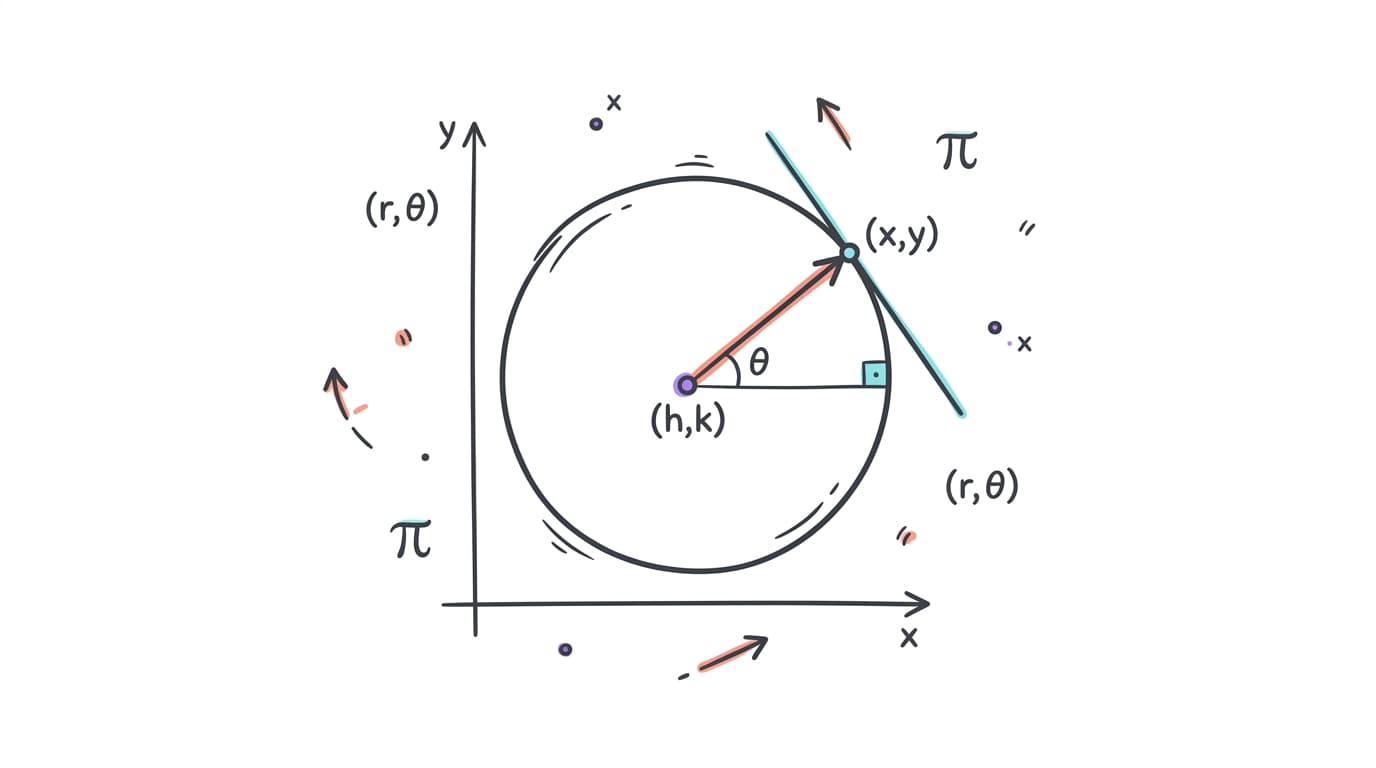
Parametric surface equations in spherical coordinates (θ,ϕ):